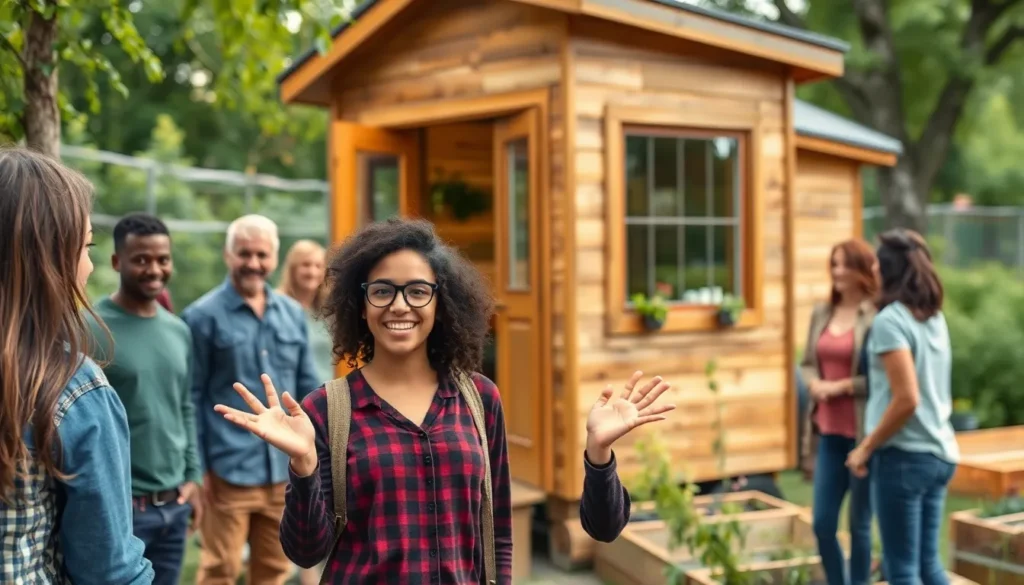
Tiny homes are more than just a trend; they’re a movement that’s sweeping the nation, one compact space at a time. As people seek simplicity in a world that often feels overwhelmingly big, tiny homes offer a refreshing alternative. Who wouldn’t want to trade their sprawling mansion for a cozy nook that’s easier to clean and cheaper to maintain?
Overview of Tiny Home Advocacy
Tiny home advocacy champions minimalism and sustainable living. Advocates promote the idea that downsizing reduces environmental impact and promotes a simpler lifestyle. They often argue that tiny homes lead to financial freedom, as lower costs allow for savings and less debt.
Several organizations support this movement, providing resources and community engagement. Nonprofits raise awareness about zoning laws and building codes that often obstruct tiny home development. Activists aim to influence legislation in favor of tiny homes, arguing they address housing shortages and serve diverse populations, including students and seniors.
Regional movements flourish as tiny home villages emerge across the United States. Cities like Austin, Texas, and Portland, Oregon, showcase these developments, allowing residents to experience the benefits firsthand. Support networks connect like-minded individuals, fostering a sense of community and shared goals.
Advocacy extends to education, with workshops teaching skills like tiny home construction and sustainable living practices. Promoting awareness of both economic and ecological benefits proves essential in rallying support. Research indicates a rising interest in tiny homes among millennials and Gen Z, pushing advocates to highlight innovative, flexible designs that cater to evolving consumer needs.
Engagement in social media platforms amplifies tiny home discussions, uniting advocates and enthusiasts worldwide. Members share success stories, design inspiration, and practical advice through these channels. Awareness campaigns often center around the concept of living lightly, resonating with those seeking to reduce their carbon footprint.
Benefits of Tiny Living
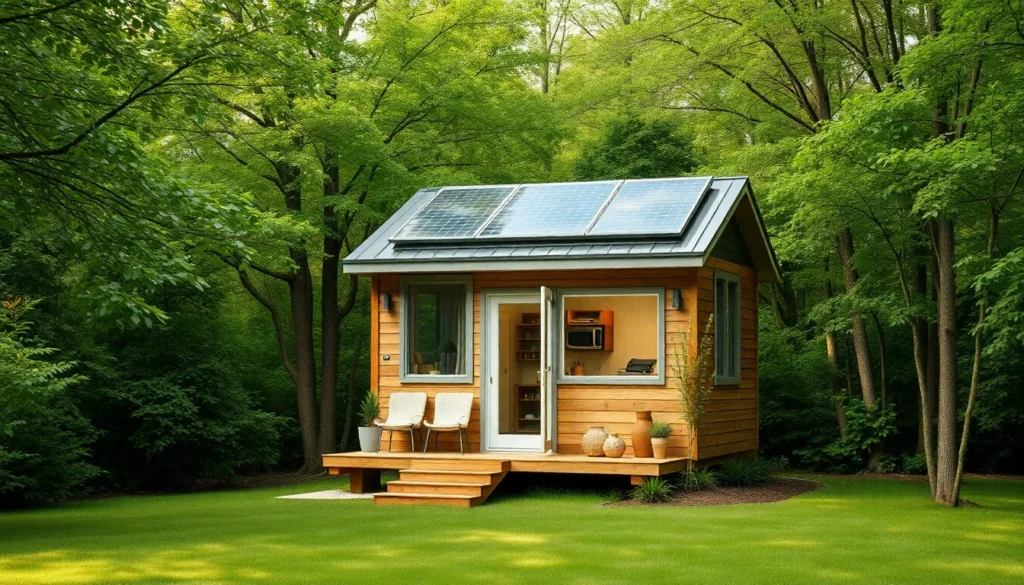
Tiny living offers numerous advantages, particularly in financial savings and environmental impact.
Financial Savings
Tiny homes significantly lower housing costs. Average expenses for a tiny home range from $20,000 to $100,000, contrasting sharply with the median price of traditional homes, which exceeds $400,000. Mortgage payments diminish due to smaller loans. Homeowners can enjoy reduced expenses on utilities, insurance, and property taxes. Many individuals report monthly expenses of as little as $200 for utilities. Additionally, tiny living encourages minimalism, leading to fewer purchases and lower overall spending. Financial freedom often becomes a reality, allowing for savings and reduced debt burdens.
Environmental Impact
Tiny homes promote sustainable living and minimize environmental footprints. Small living spaces require fewer resources for construction and less energy for heating and cooling. The average tiny home uses about 45% less energy than a conventional house. Tiny homes also necessitate smaller lots, preserving green spaces and encouraging more efficient land use. Many builders incorporate eco-friendly materials and systems into their designs. Efficient water management systems and renewable energy sources, such as solar panels, further enhance sustainability. By embracing tiny living, individuals actively participate in reducing waste and conserving resources.
Challenges Faced by Tiny Home Advocates
Tiny home advocates face significant challenges in promoting their lifestyle choice. These hurdles include strict zoning laws and shifting social perceptions.
Zoning Laws and Regulations
Zoning laws often create barriers for tiny home development. Many cities enforce codes that prioritize traditional housing sizes, limiting the placement of tiny homes in residential areas. Advocates frequently encounter resistance from local governments that might not recognize tiny homes as legitimate housing options. Many regions lack specific regulations governing tiny homes, resulting in uncertainty for potential owners. This inconsistency complicates the establishment of tiny home communities, making it difficult for advocates to promote this sustainable living model. Without supportive legislation, tiny home enthusiasts struggle to find suitable locations for their residences.
Social Perceptions
Social perceptions pose another significant challenge for tiny home advocates. People commonly associate homeownership with larger, more conventional houses, often viewing tiny homes as inferior. Many individuals lack understanding of the benefits of tiny living, including financial freedom and environmental sustainability. Misconceptions about living space and amenities contribute to skepticism surrounding the tiny home movement. Advocates actively work to shift these views by showcasing the advantages of downsizing. Through education and outreach, they aim to change minds regarding the viability of tiny homes as a lifestyle choice. Acceptance is crucial for the long-term success of tiny home communities.
The Future of Tiny Home Advocacy
Advocacy for tiny homes continues to evolve as interest grows. New trends and innovations pave the way for this lifestyle choice.
Trends and Innovations
Tiny home designs increasingly focus on sustainability and functionality. Builders are integrating smart technology to enhance energy efficiency and space utilization. Prefabricated units gain popularity as they reduce construction time and costs, appealing to a wider audience. Modularity also allows customization, enabling homeowners to adapt spaces to their needs. Alternative building materials, such as shipping containers and recycled products, are being utilized to minimize environmental impact. Interest in off-grid solutions has surged, leading to stand-alone systems that provide complete independence. As tiny home innovations advance, a broader range of options becomes available, attracting diverse demographics and transforming housing landscapes.
Community Building
Community connections are central to the tiny home movement’s success. People are increasingly drawn to tiny home villages fostering shared experiences and mutual support. Cooperative living arrangements provide avenues for residents to collaborate on resources and activities. Workshops and events promote interaction, ensuring a strong sense of belonging among residents. Advocacy groups play a critical role in establishing networks, raising awareness, and providing education about zoning issues. Local governments are beginning to recognize the value of tiny home communities, leading to supportive policies. As more tiny home developments emerge, they create environments where individuals can thrive collectively.
Conclusion
Tiny home advocacy is reshaping the landscape of modern living by promoting a lifestyle that prioritizes simplicity and sustainability. As communities embrace this movement, the benefits of financial freedom and environmental stewardship become increasingly clear.
With ongoing efforts to address zoning challenges and shift societal perceptions, tiny homes are gaining recognition as a viable housing solution. The rise of innovative designs and cooperative living arrangements further strengthens the movement.
As more individuals and organizations rally behind tiny home advocacy, the potential for transformative change in housing and community dynamics continues to grow. This shift not only fosters personal connections but also paves the way for a more sustainable future.